Gentle, non-invasive light that calms redness, supports healing, and helps reduce acne—delivering a clearer, brighter look with no downtime.

Gentle, non-invasive light that calms redness, supports healing, and helps reduce acne—delivering a clearer, brighter look with no downtime.
LED (light-emitting diode) therapy uses specific colours (wavelengths) of visible light to target different skin concerns. Red light penetrates more deeply and is believed to reduce inflammation and stimulate collagen, while blue light acts more superficially and helps reduce acne-causing bacteria. Treatments are painless and suitable for most skin tones.
At Slimm & Well, we select the appropriate light (or a combination) for your skin goals—calming breakouts, brightening tone, or supporting post-treatment recovery. A short series of sessions usually delivers the best improvement, with quick, comfortable appointments and no recovery time.
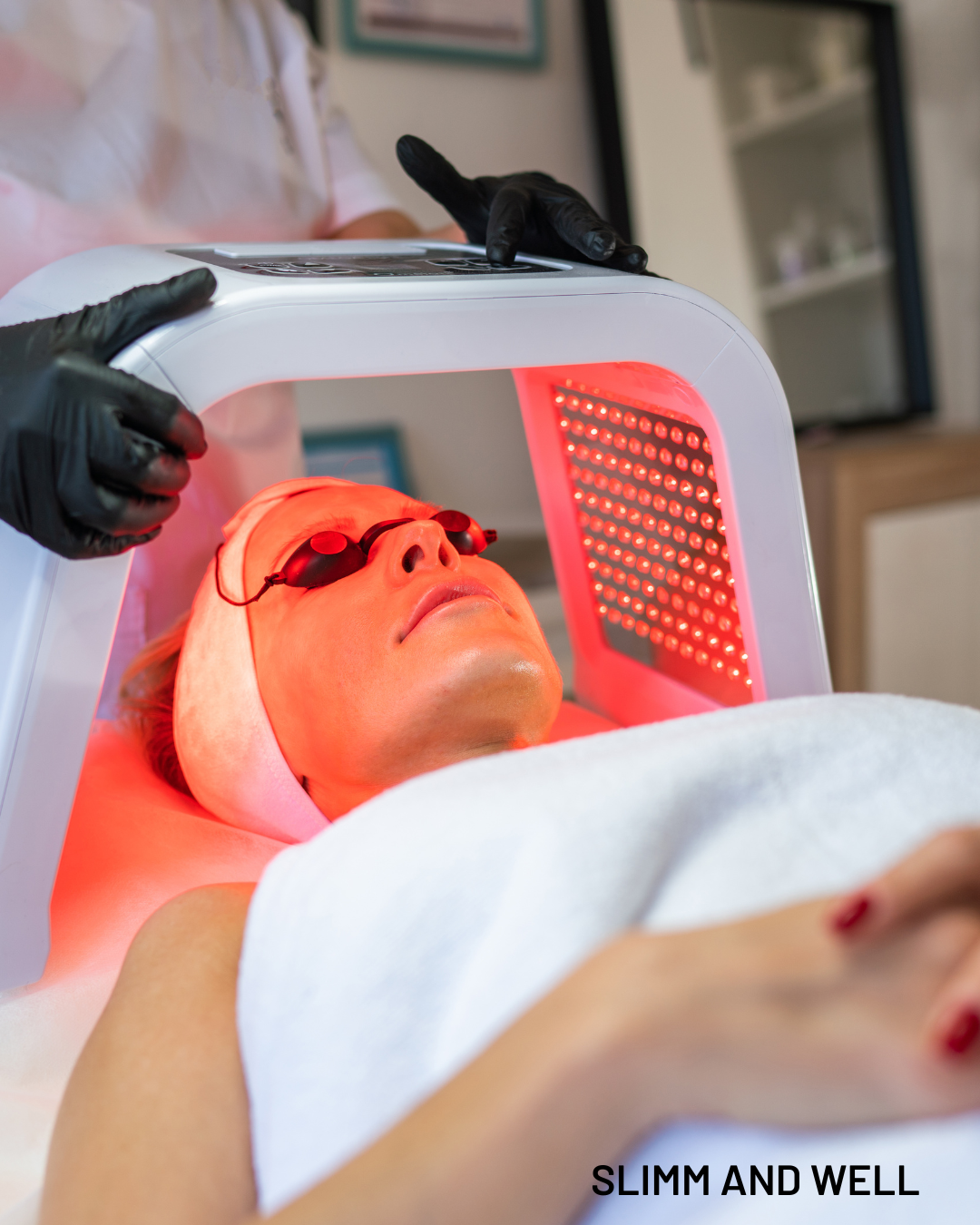
During your LED Light Therapy session, your skin is gently cleansed and your eyes are protected with specialised goggles. The device is then positioned above the treatment area while you simply lie back and relax under the light. Each session lasts around 20 minutes, during which you may feel a gentle warmth, but no pain or discomfort.
LED Light Therapy offers multiple benefits: it helps calm redness, reduce inflammatory acne, and may stimulate collagen activity for smoother-looking skin. The treatment is comfortable, non-invasive, and safe for most skin types, with no UV exposure involved. Normal effects are mild and temporary, such as slight redness or irritation, while serious side effects are very uncommon. It’s important to note that although light therapy can reduce breakouts, it rarely clears acne completely on its own; the best results are achieved when it is part of a broader, personalised skincare plan.
There is no downtime after LED Light Therapy, so you can return to your usual activities right away. For the best outcome, we recommend avoiding direct sun exposure for 48 hours and applying SPF diligently. Most clients notice visible improvement after a short course of treatments—typically weekly sessions for about a month—followed by occasional maintenance to keep skin looking clear, calm, and radiant.
Contact us if you notice unexpected irritation, rash, or worsening redness after treatment—we’ll assess and guide aftercare.
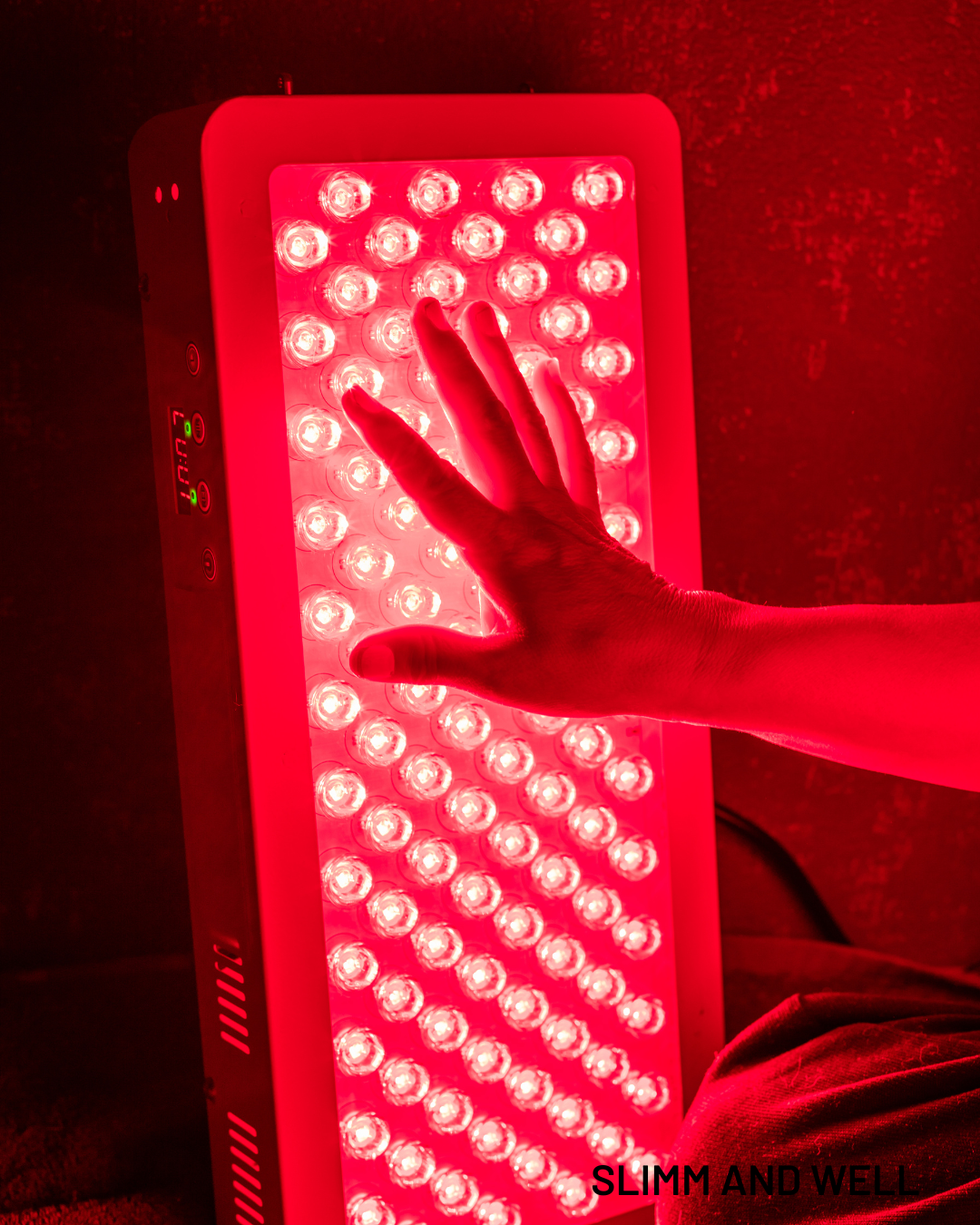
LED Light Therapy is ideal for clients seeking calmer, clearer, and more radiant skin — offering a gentle, non-invasive solution that supports acne reduction, redness relief, and overall skin rejuvenation with no downtime.
More than 250 five-star reviews on Google


I recently started my laser treatments and I like the progress so far. Carin is so lovely and welcoming which makes it easy to be relaxed during the treatments. She’s very careful and professional and therefore no burns. She is always happy to chat about the treatments and gives proper information for aftercare. I highly recommend her services.
I have been getting my skin treatments here at Skin and well since July 2023. I am really pleased with the results received thus far. My routines include, skin peels and micro needling. Both Carin and Ingrid are amazing and provide the best skin regime and advise. Thank you ladies for bringing back my glow.
I recently had the pleasure of experiencing an absolutely fantastic Microdermabrasion and Luminescence Peel facial at Kyalami Slimming & Wellness, thanks to the talented Caren and her incredible team. The expertise and attention to detail were evident throughout the entire session. The Microdermabrasion treatment left my skin feeling incredibly smooth and renewed, while the Luminescence Peel added a radiant glow that I couldn't be happier with.
Yes—LED uses visible light (not UV) and is considered safe across skin tones when properly performed.
No. You may feel mild warmth but no pain.
Many clients book weekly sessions for about a month, then switch to monthly maintenance. Your plan depends on your goals.
People on photosensitising medications (like isotretinoin) or with a history of certain eye diseases or skin cancer may be advised to avoid LED; we’ll screen this in consultation.